Natural selection granted us large brains. The evolutionary cost is having to feed them. The human brain's high-energy demands led to development of a strong preference for fat. We consume more fat than any other primate on average. We are also adapted to more easily digest and metabolize fats.
There are two major kinds of fat that our brains depend on most for its development and regular maintenance. These are the long-chain polyunsaturated fatty acids (LC-PUFAs), omega-3 docosahexaenoic acid (DHA) and omega-6 arachidonic (AA). These two LC-PUFAs can't be made de novo, making them essential in the diet. DHA and AA are supplied by seafood, eggs, or animals. They can also be supplied as their 18-carbon precursors alpha-linolenic acid (ALA) and linoleic acid (LA), found mainly in plants and their seeds.
ALA and LA precursors require conversion to become long-chained through a series of steps of desaturation and elongation. In particular, delta-5 and delta-6 fatty acid desaturases build onto the carboxyl end of the carbon chains of the ALA and LA by introducing double bonds. These converting enzymes are rate-limiting.
The rate-limiting enzymes are encoded into the genome by FADS1 and FADS2. The FADS region has been of special interest to researchers because of variations in single-nucleotide polymorphisms (SNPs) that could lend clues about human evolution including our larger brains. Yet, to date, there have not existed any studies evaluating FADS mutations among humans and related species.
Showing posts with label evolution. Show all posts
Showing posts with label evolution. Show all posts


15 March 2012
Walking Off The Influence of "Thrifty Genes"
"I can't help it, it's my genes" is a familiar phrase among frustrated dieters and gym goers who feel they can’t make the scale budge despite all efforts to reduce calories and exercise more. There may be something to their justification. After all, weight can depend partly on genetic makeup (among several other factors).
Luckily, the genetic revolution continues to churn out exciting news giving us hope that, no, we're not completely left at the mercy of the wrong kind of genes. The latest example is a study presented March 14 at the American Heart Association meeting in San Diego. The study found that people could keep their obesity genes under wraps by doing as little as turning off the tube and taking a brisk walk.
11 September 2011
Evolution of the "Hero's Journey"
When I was a child, my father told me stories of his time spent working for a gold mining company in the Amazon jungle. He brought home tales of fishing for piranhas, evading giant venomous snakes, and nearly being eaten alive by a swarm of ants. Dad also traded with indigenous tribes. My curiosity was piqued by photos of those natives, so shockingly naked, and their beautifully crafted bows and arrows. Dad had one on display that he had acquired in exchange for a pair of jeans, which my brother and I used to play with until it almost broke (leading to a stern warning).
06 September 2011
What chimpanzee predatory behavior can tell us about early human diets

Because of how much meat humans eat, a few major questions are under discussion among biologists and anthropologists: What role did meat play in human evolution? How much meat did human ancestors really eat early on?
Cutmarks on bones, unfortunately, don't say much about whether meat was eaten once a day, once a week, or once a month. But could a few clues into early human diets be gleaned from the extensive field research into the predatory nature of wild chimps?
11 August 2011
Intermittent fasting for cardiovascular health
At a time when our ancestors existed as hunter-gatherers in the Paleolithic, it's clear that food was not always available and that the fluctuation of feast and famine was probably more apparent. The theory of thrifty genes has it that our metabolic function is dependent on these fluctuations for optimal insulin function.
So, it's hypothesized that since intermittent fasting may have been instrumental in the selection of our genes, its practice may have lasting benefits on insulin sensitivity. Findings to date in humans are that fasting does improve insulin sensitivity by inducing increases in circulating adiponectin along with changes in plasma leptin. By these mechanisms, intermittent fasting acts on increasing insulin's action differently than physical activity.
So, it's hypothesized that since intermittent fasting may have been instrumental in the selection of our genes, its practice may have lasting benefits on insulin sensitivity. Findings to date in humans are that fasting does improve insulin sensitivity by inducing increases in circulating adiponectin along with changes in plasma leptin. By these mechanisms, intermittent fasting acts on increasing insulin's action differently than physical activity.
27 May 2011
Fitness, hunter-gatherer style
 |
| Aché man hunting. Credit: Wiki |
“So the bottom line is that foragers are often in good shape and they look it. They sprint, jog, climb, carry, jump, etc all day long but are not specialists.”The quote above is excerpted from a description given by anthropologist Kim Hill (whose work I've previously written about here) of his experience observing the behaviors of the Aché of Paraguay and the Hiwi of Venezuela. The ASU professor, who has been living and studying the tribes for more than 30 years, recently had his work highlighted in a commentary published in Progress in Cardiovascular Diseases.
The article, whose lead author was James O'Keefe, MD, examines the daily physical activity patterns among hunter gatherers and fossil hominins. According to the authors, ancestral hunter-gatherers expended as much as five times more amounts of energy on physical activity than the average modern sedentary adult.
Based on data from Cordain's earlier work and that of colleagues, the article proposes a cross-training exercise regimen, as opposed to specialized trainings of Olympic athletes, intended to mimic the way of life that is required of a typical hunter gatherer. The "prescription for organic fitness" includes 14 essential features, which the authors suggest "appear to be ideal for developing and maintaining fitness and general health while reducing risk of injury."
16 May 2011
How Neandertals Lived, Hunted, and Ate
This Discovery Channel series "Neanderthal" presents a wonderful re-enactment of how Neandertals lived in small groups, how they hunted together, and how they ate.
I was especially taken by how much we know about the way they used tools to butcher meat, scraped animal hides (by holding the hides in their teeth and face as a tool to spread the stress around the skull) for use in making clothing (shown in Part 1).
It's amazing that we know so much about these ancient peoples -- how strong they were, how intelligent, how adaptive, as said in the documentary.
The scientific techniques mentioned that lend to our understanding of Neandertals are studies on fossilized feces, worn-out teeth from scraping animal hides, and bone fractures that reveal injuries that led to illness or death.
08 May 2011
Diagnosing Darwin's multiple gastrointestinal diseases
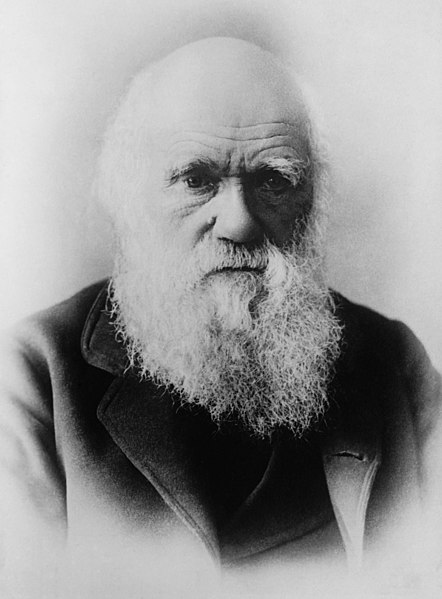 |
| Charles Darwin (Credit: Wikimedia) |
England's physicians of the time could not properly diagnose the syndrome of cyclic vomiting, although they tried by suggesting its etiology was anything to do with allergies, gout, and mental overwork. But what of an assessment of Darwin's symptoms by modern physicians of today?
On Friday, May 6, modern physicians gathered to discuss Darwin's lifelong illness at the 18th Historical Clinicopathological Conference sponsored by University of Maryland Health Care System. The conference previously has examined and provided modern medical diagnoses of other prominent historical figures such as Abraham Lincoln and Edgar Allan Poe. The scientists chose Darwin for this year's conference to commemorate the naturalist's 200th birthday.
At the conference, the medical researchers determined that the nature of Darwin's sickness may be explained by multiple gastrointestinal illnesses he might of contracted while traveling to remote areas of South America, the Pacific, Far East, and Africa. A transmission of parasites, for example, may have led to what would become chronic "Chagas disease" and "peptic ulcer disease," further explaining the onset of Darwin's cardiac symptoms and eventual heart disease.
03 May 2011
News that "Nutcracker Man didn't eat nuts" isn't exactly news
 |
| Photosimulation montages of "Nutcracker Man's" dental microwear. Reference: Ungar et al. PLoS One 2008. |
But, it turns out, the hominin species who in evolutionary terms has been likened to our great uncle was more likely to have eaten soft fruits, leaves and grass, according to carbon stable isotope data just published in PNAS by Thure Cerling and his team from University of Utah.
See more about Cerling's paper on John Hawks's blog.
A big deal has been made of this new paper and rightly so, but reporters should also note that the findings are a confirmation of what was already supposed based on dental microwear (shown above) almost exactly three years ago.
On 30 April 2008, Peter Ungar and colleagues at University of Arkansas also told us Nutcracker Man didn't eat nuts in a study in PLoS One (and featured by @9brandon in Wired Science here) citing wear and tear on the hominin's teeth that looked nothing like that of what would've been produced by hard foods.
02 May 2011
Michael Ruse on "Origins of Human Evolution"
 |
| Michael Ruse |
Why were the great Greek philosophers (including Plato and Aristotle) firmly set against the idea of natural origins? Why were they so adamant that natural origins were impossible? According to Michael Ruse, a philosopher of biology at Florida State University, the reason is the problem of "final causes."
Aristotle, for example, "could not see how something like this could come about through blind law," said Ruse in a lecture given at Arizona State University’s Origins Project Science and Culture Festival on April 7, 2011.
This is why, for good scientific reason, said Ruse, they turned their back and rejected the idea of natural origins.
What was the big move? Robert Boyle particularly put his finger on it, said Ruse, we’ve changed the thinking of the world as an organism, to the world as a clock. This was a new metaphor for the world—the world is at some level a machine.
20 February 2011
Evolution of Lactose Tolerance in Africa
 |
| Sarah Tishkoff |
Sarah Tishkoff has been studying this phenomenon of recent lactose tolerance in African pastoralist populations. She shared her findings on Sunday morning at #AAASmtg in Washington DC.
The ability to digest milk as infants is with the expression of lactase-phlorizine hydrolase (lactase), which is specifically expressed by brushborder cells in the small intestine.
But shortly after weaning, the expression of lactase decreases sharply -- that is, except in populations that are lactase persistent. In 2002, an elegant genetic study found the gene for lactase in European populations.
Tishkoff showed us in charts and on a map how she performed genetic studies on the African pastoralist populations with lactase tolerance. Based on the findings, she found a perfect example of convergent evolution -- that several of the populations had developed lactose tolerance in different ways genetically -- because of strong selective pressures to drink milk.
With her latest study and archeological data, she is now tracking the origins of pastoralism. She showed us a map (Smith 1992) where it's clear that most lactose tolerance emerged only in the last few thousand years, but at different times. Her research confirms that pastoralism was brought into southern Africa only recently, most likely from the Great Lakes region.
"So, are humans still evolving? Yes," Tishkoff said.
Why was milk selective pressure so strong? There has been a lot of debate, Tishkoff said, such as whether it is the source of water, protein, or calcium. But it's not everywhere, so there has to have been a cultural transformation in each region.
"There's only some environments that can handle that cultural development," Tishkoff said, but in each case, there has to be an underlying genetic variation and the different variants suggest that perhaps for some populations had a more difficult time with the change or took longer to adapt to it than others.
23 December 2010
How diet shaped human evolution
Anyone who is keenly interested in having a better understanding of why we eat what we eat as human beings should take an hour or so to watch this introductory talk given by anthropologist Teresa Steele, of UC Davis, given at the California Academy of Sciences on the topic of evolution of the human diet.
I found her talk fascinating, especially because I've been highly interested in how the use of fire and aquatic animals may have played a part in fueling human brain growth, so I ended up taking copious notes. I should note that there isn't anything new presented here, but Steele is excellent at presenting the chronology. If you don't have an hour to watch, then just see my notes below chapter by chapter from "Australopithecus to agriculture."
Human diet is unique among apes
Steele finds that diet is central to her research. "If we want to live, we have to eat," she says. Food is what ultimately supports demographic populations. One thing that is unique about humans in comparison to other apes is a long childhood, a long learning period, that is required for acquiring the knowledge necessary to become successful foragers in a wide environment. After all, humans have exploited almost every nutrient resource in their short time on the Earth.
Another unique thing is how much meat we consume. A large portion of our calories comes from meat. Unlike chimpanzees, who eat the most meat among apes, human eat about 10 times more, Steele said. And we eat animals that are usually larger than us like wildebeasts, reindeer, and mammoths. Steele shows a graph comparing chimp diets to that of tropical hunter gatherers groups, who typically eat little meat. Other hunter-gatherers of the North like the Inuit eat a diet almost entirely of meat. In general, humans specialize in acquiring nutrient-dense foods meats, tubers, and nuts, while chimps select non-nutrient dense like leaves that are more easily collected.
Research themes
When did these differences evolve? Steele presents us with her research themes, which include the following:
What methods does Steele use to construct ancient human diets? She says that zooarchaeology and tool analyses gives us a window into ancient demographies. There are stone, bone and antler tools. And, on occasion, organic wood and plant tools are preserved. Also, biological anthropology helps tell us more such as skeletal morphology and bone chemistry.
Lucy's diet
Steele introduces the diet of Lucy's species first, Austrolopithecus afarensis of 3.7-2.8 mya, who ate a flexible diet suitable for a variety of habitats.
The skeletal biomechanics and dental structure suggest they ate mostly soft fruits and occasional hard seeds. However, Steele says we assume that they may have eaten some meat because chimps eat meat, but it's unclear just how much.
She points out that, recently, there was a groundbreaking discovery published in Nature (and reported in Scientific American by the science writer Kate Wong (Twitter: @katewong) ) of cut-marked bones in Dikika, Ethiopia suggesting Lucy's species even used stone tools for eating meat.
"This has opened up a window," Steele says for more research, especially in the possibility of stone tool use for extracting nutrients from carcasses of smaller animals. It's worth noting that no stone artifacts were found associated with the cut-marked bones (paleoanthropologist John Hawks (Twitter: @johnhawks) has written more about this topic on his blog).
Cut-marked bones 2.5 million years ago
Typically, a discussion of human diet begins at about 2.5 mya when there is an abundance of cut-marked bones (such as the jaw of a wildebeest) and percussion marks from marrow extraction. Marrow has been an important human resource for nutrients up until modern times because it's high in fat, high in calories.
There is also evidence of Oldowan artifacts (hominin stone tools) available so we know what they were using to get to the marrow.
Then, at about 1.8 mya there are a lot more assemblages, more stone tools, as found in Olduvai Gorge, Tanzania, by Mary Leaky. There are also lots of large bodies bovids and carnivores on the landscape. Steele asks, How did these ancient hominids acquire these large carcasses? Is it conceivable that they could've brought down a wildebeast with just tools?
This is where we get into a discussion of scavenging versus hunting, she said. A related discussion is what percentage of the diet was meat-based versus plant-based. Also, were these ancient hominins practicing passive scavenging getting to a carcass to get the last scraps of meat or breaking open bones for marrow. Or was it active scavenging, chasing off carnivores?
These are all active areas of research. For answers, researchers look in locations of lakeside margins. Bovids came to drink, carnivores know this, we look into these locations to try and reconstruct the foraging.
Aquatic animals
Published recently in the springtime, was a paper suggesting that 1.9 mya in East Turkana, there's evidence of Oldowan foraging of carcasses of aquatic animals like crocodiles and turtles. Steele shows a cut marks on a toe bone of a croc, turtle shells and catfish bones.
"For the first time, we see exploitation of aquatic resources highlighting the diversity of diet. Hominins are very opportunistic, exploiting whatever was available," Steele said.
"This also raises a challenge as with cut-marked bones with Dekika, to try to see if there are cut-marks on similar bones," Steele explains. "The small animal component has been overlooked so we may need to look closer."
Steele also discusses another interesting aspect of using aquatic resources (which will interest any nutritionist like myself). The aquatic resources would have been an easier way to access long-chain omega-3 fatty acids, which are also present in organ meats and brain tissues of large animals.
"The long-chain unsaturated fatty acids are needed for brain growth," she explained. "At this time period we do see an expansion of brain sizes, so perhaps there's a relationship here. We need more data, more examples where we see brain expansion with this kind of diet."
Archeulean hunting and scavenging
Moving more recently in time, we see Homo erectus, hominins of larger body size, and who were first to populate Eurasia 1.6 mya to 285 kya. Were they hunting or actively scavenging? This is unclear, but earlier in Archeulan, we see evolution of technology.
Tear-drop shaped hand axes appear and body size changes. The humans are obviously living in social groups. An illustration she uses takes the liberty of showing piles of plant remains used to make wooden spears. The plant use is unknown.
There are a large number of animal bones with few cut marks. So, the question remains, were hominins still minor players as carnivores, simply cutting off limbs and eating elsewhere. The challenge is finding places away from water sites such as in caves.
Also, we start asking questions about use of fire at this time period.
Wood spears
At around 400 kya, Steele shares that there are one or two examples of exceptional preservation of organic materials such as wooden spears (survived in an oxygen-poor environments from marshes of Germany). They are more likely to be thrusting spears. They have been fire-hardened, sharpened, so it indicates use of fire.
Fire is really useful for warmth, protection from predators, for cooking and cooking really changes the nature of food. It helps make inedible foods edible, releases nutrients for our digestive systems. But fire doesn't preserve well.
The earliest known site where fire is documented is in Israel, dated to 780 kya. "We have an indicator of fire use and plant remains. They're preserve better once charred in archaeological sites," Steele says. "We don't find it common until about 300,000 years ago." This is between Oldowan and modern behavior in the Archeulian.
Neandertals
About 200 kya came the Neandertals and they were competent hunters and manufacturers of stone tools. Interestingly, despite these complex behaviors, they did not have as long a childhood. The Neandertals were able to pick up their abilities pretty early in life.
As part of her post-doc in Germany at Max Plank Institute, Steele worked with identifying species in archaeological sites where Neandertals hunted reindeer and bison. She showed antlers, elbows of reindeer fractured for extracting marrow, and examples of bones in discard piles due to little meat.
"We also see very little carnivore involvement and abundant human impacts, unlike the earlier where there was very heavy carnivore involvement meaning humans were hunting," she said. The Neandertals were dominant carnivores by this time.
Now we can ask about hunting strategy. Steele explains she uses a very low tech method: "We have a number of mandibles, so just looking at the eruption of teeth, we can reconstruct ages of animals." Also, reindeer are conveniently sexually dimorphic and because reindeer give birth at a moment in spring (babies are born at once) we can look at eruption of teeth to see if they're hunted. In a specific location, all ages are present, males and females, so it looks like the reindeer herd would have been slowed allowing the humans to hunt more of them.
Bone chemistry
Carbon isotopes tell us about the vegetation in the environment and nitrogen isotopes tell us about the trophic levels. Carnivores have more concentration of nitrogen. Animals that are aquatic even more nitrogen, so we can look at bone chemistry to reconstruct diet. There aren't much indicators of plant remains, but in a Neandertal tooth you see it's heavily etched by roots because of the acid of roots. The bone chemistry data put Neandertals right along the lines of other carnivores. The majority of protein came from meat (although not mentioned in the talk, new findings show they also practiced cannibalism, reported via science writer Carl Zimmer (Twitter: @carlzimmer)).
Hunting technology
How were the Neandertals doing the hunting? It appears they were using thrusting spears. We know this because it's possible to look at stone artifacts to see if they are aerodynamic or more asymetrical and lumpy for a thrusting spear. We can look at the breakage of the tip as well as the butt. In characteristic way we can look at the breakage.
Middle stone age in Africa 285,000
So while Neandertals are doing their thing in Europe, what's going on in Africa? In Africa, we have the middle stone age and humans who were morphologically similar to us. The big discussion in paleoanthropology is, How modern were they? Did they have symbolism? Were they just like us or behave more like Neandertals without as much symbolism?
In the middle stone age we have good evidence of hunting and burning. There was abundant burning. But, within the middle stone age, we see no evidence of consumption of fish. The people seem to be limited in capturing fish and birds, although there were people accessing coastal resources along the southern coast of Africa, eating a number of mollusks. Could mollusks have fueled brain growth and brought with it symbolic behavior? There were also a number of fireplaces. Did fire fuel brain growth (if you ask primatologist Richard Wrangham as I did last February, then the answer is a resounding "yes!")? This is something that requires further research.
Modern humans in Europe
In Europe about 40 to 10 kya, we have Upper Paleolithic with fully modern humans in Europe. They hunted large game similar to Neandertals and with projectile technology unlike Neandertals. People who were just like us in biology and behavior. This is when we see projectiles for the first time. We see the reconstruction of a spear thrower, with an adle addle.
These modern humans then also enjoyed a diverse diet with abundant small game like fish and flying birds. That's quite different than what their Neandertals cousins were doing, and what humans in Africa of the middle-stone age were doing.
We can also see this in the bone chemistry of the Upper Paleolithic humans. There was definitely protein coming in from aquatic sources, per the nitrogen values in the bones. It's also clear from the bone chemistry that modern humans were eating a much more diverse diet.
Plant use
Getting back to plant use, just recently in PNAS, an article was published about use of plants in Paleolithic times. Grindstones and pestles were used to grind starch grains, reeds, cattailes and ferns that have underground storage organs (roots). These grindstones pulverized the roots and perhaps made flour out of them. So, this is it, the diversity of diet that spread from Africa about 50 kya, and support for the hypothesis that humans replaced Neandertals because of flexibility of diet. Is this what allowed humans to be more successful?
Intensification of resource extraction, including agriculture
Bringing us into more recent time period to complete the story, 50kya humans colonized Europe and Asia and Australia. At around 15kya, they colonized the new world. So, by 10kya we have humans everywheere by 10kya other than Pacific islands and Antarctica. Diet tends to evolve and change. Humans don't stay focused on large game, and birds and fish. They intensify. What we see with intensification in the Holocene is the use of technology to extract nutrients from resources.
Steele shows pictures of mussel shells having accumulated over a short period of time. There was a heavier investment in technology. This creates a stable food supply that allows populations to grow. "We can see this in our local California native indians," she said. Just to highlight investment in technology, she shows slides on the natives' use of technology. "These are all the steps to take acorns and make it into something consumable. They're toxic, so you have to dry them, pulverize and leach them. It requires very heavy technological input."
The intensification brings with it the origins of agriculture at 10 kya. At 10kya we see changes in environment tha promote plant resources, a shift in global climate where there's more CO2, a more wet and stable environment, more admittable to plant production. People are becoming more dependent on smaller resources from agriculture. The fish, they help populations to grow and hunter-gatherer populations are more stable. It's clear from her slide that because of agriculture, there's an uptick in human population growth. Then, when industrialized agriculture arrives, there's an inflection point when we see a high rate of population growth. That's where we are today in the evolution of human diets. That's 4 million years (in 40 minutes).
Question 1: Why did humans replaced Neandertals?
The first question posed to Steele after her talk was about her thoughts were about why humans replaced Neandertals. She answered, "Yes, I think ultimately it's due to dietary differences." There's not much differences in species hunted, not so different butchery, but you do see a difference in stone artifacts and projectile points. The modern human tools were more reliable and accurate. They would've been able to obtain a larger number of reindeer, and been more consistent in hunting, along with having a more diverse diet.
The more ultimate explanation, however, was if it was cultural. Did modern humans have a more complex language? Could symbolism have allowed us to communicate in a more effective way, made our hunting more effective, that's where we're going now with the research. Language is fundamental, so if we can track where language evolved, then we'll find more answers?
Question 2: What conclusive evidence is there of cut marks?
The question asked to Steele reverted back 3.2 mya to how solid the evidence was of Australopithecus afarensis making cut marks. Steele answers that the cut marks are just as conclusive as later time periods. "If we are going to accept the later cut marks, then we have to accept the earlier," she said. "For me they're fine in terms of more recent assemblages. The challenge is to find more cut marks to see if it was widespread or a one-time thing. Who made them? Where are the stone tools?" That's the next project.
Question 3: What ratio of fatty acids in diet correspond to brain size?
Lastly, an audience member asked if recent work on long-chain omega-3s on mood disorders supports the theory that omega-3s from aquatic resources fueled brain growth. The quiestoner also mentions work by others on omega-3 to omega-6 ratios, which has changed since huntergatherer times (from 1:1-3 to 1:10 to 1:20). Could this be the reason that brain sizes are getting smaller?
Steele answers that, in general, there's body size reduction and brain size reduction. Hunter-gatherers of the anthropological record were quite robust. Now we see decrease in stature, brain size reducing, body size reducing. The change in body shape may be due to changes in diet. Whether it's omega-3/omega-6? Steele says she couldn't say for sure if that's the case.
(Note: Hat tip to @KeithNorris and @evolvify (see blog post here) for first alerting me to this new video via their tweets).
I found her talk fascinating, especially because I've been highly interested in how the use of fire and aquatic animals may have played a part in fueling human brain growth, so I ended up taking copious notes. I should note that there isn't anything new presented here, but Steele is excellent at presenting the chronology. If you don't have an hour to watch, then just see my notes below chapter by chapter from "Australopithecus to agriculture."
Human diet is unique among apes
Steele finds that diet is central to her research. "If we want to live, we have to eat," she says. Food is what ultimately supports demographic populations. One thing that is unique about humans in comparison to other apes is a long childhood, a long learning period, that is required for acquiring the knowledge necessary to become successful foragers in a wide environment. After all, humans have exploited almost every nutrient resource in their short time on the Earth.
Another unique thing is how much meat we consume. A large portion of our calories comes from meat. Unlike chimpanzees, who eat the most meat among apes, human eat about 10 times more, Steele said. And we eat animals that are usually larger than us like wildebeasts, reindeer, and mammoths. Steele shows a graph comparing chimp diets to that of tropical hunter gatherers groups, who typically eat little meat. Other hunter-gatherers of the North like the Inuit eat a diet almost entirely of meat. In general, humans specialize in acquiring nutrient-dense foods meats, tubers, and nuts, while chimps select non-nutrient dense like leaves that are more easily collected.
Research themes
When did these differences evolve? Steele presents us with her research themes, which include the following:
- Meat eating. We are consuming animals that are larger than ourselves like wildebeast, reindeer, horses, and so on. Chimpanzees hunt for colobus monkeys, birds, and small amphibians. So when did meat eating appear and when did the transition occur to eating animals larger than us?
- Hunting technology. What technology did humans use to acquire large animals? Spears, bows and arrows, projectile technology? These are complex, so they can represent greater cognition. When did they occur?
- Intensification of resource use, including agriculture. This happened much more recently.
What methods does Steele use to construct ancient human diets? She says that zooarchaeology and tool analyses gives us a window into ancient demographies. There are stone, bone and antler tools. And, on occasion, organic wood and plant tools are preserved. Also, biological anthropology helps tell us more such as skeletal morphology and bone chemistry.
Lucy's diet
Steele introduces the diet of Lucy's species first, Austrolopithecus afarensis of 3.7-2.8 mya, who ate a flexible diet suitable for a variety of habitats.
The skeletal biomechanics and dental structure suggest they ate mostly soft fruits and occasional hard seeds. However, Steele says we assume that they may have eaten some meat because chimps eat meat, but it's unclear just how much.
She points out that, recently, there was a groundbreaking discovery published in Nature (and reported in Scientific American by the science writer Kate Wong (Twitter: @katewong) ) of cut-marked bones in Dikika, Ethiopia suggesting Lucy's species even used stone tools for eating meat.
"This has opened up a window," Steele says for more research, especially in the possibility of stone tool use for extracting nutrients from carcasses of smaller animals. It's worth noting that no stone artifacts were found associated with the cut-marked bones (paleoanthropologist John Hawks (Twitter: @johnhawks) has written more about this topic on his blog).
Cut-marked bones 2.5 million years ago
Typically, a discussion of human diet begins at about 2.5 mya when there is an abundance of cut-marked bones (such as the jaw of a wildebeest) and percussion marks from marrow extraction. Marrow has been an important human resource for nutrients up until modern times because it's high in fat, high in calories.
There is also evidence of Oldowan artifacts (hominin stone tools) available so we know what they were using to get to the marrow.
Then, at about 1.8 mya there are a lot more assemblages, more stone tools, as found in Olduvai Gorge, Tanzania, by Mary Leaky. There are also lots of large bodies bovids and carnivores on the landscape. Steele asks, How did these ancient hominids acquire these large carcasses? Is it conceivable that they could've brought down a wildebeast with just tools?
This is where we get into a discussion of scavenging versus hunting, she said. A related discussion is what percentage of the diet was meat-based versus plant-based. Also, were these ancient hominins practicing passive scavenging getting to a carcass to get the last scraps of meat or breaking open bones for marrow. Or was it active scavenging, chasing off carnivores?
These are all active areas of research. For answers, researchers look in locations of lakeside margins. Bovids came to drink, carnivores know this, we look into these locations to try and reconstruct the foraging.
Aquatic animals
Published recently in the springtime, was a paper suggesting that 1.9 mya in East Turkana, there's evidence of Oldowan foraging of carcasses of aquatic animals like crocodiles and turtles. Steele shows a cut marks on a toe bone of a croc, turtle shells and catfish bones.
"For the first time, we see exploitation of aquatic resources highlighting the diversity of diet. Hominins are very opportunistic, exploiting whatever was available," Steele said.
"This also raises a challenge as with cut-marked bones with Dekika, to try to see if there are cut-marks on similar bones," Steele explains. "The small animal component has been overlooked so we may need to look closer."
Steele also discusses another interesting aspect of using aquatic resources (which will interest any nutritionist like myself). The aquatic resources would have been an easier way to access long-chain omega-3 fatty acids, which are also present in organ meats and brain tissues of large animals.
"The long-chain unsaturated fatty acids are needed for brain growth," she explained. "At this time period we do see an expansion of brain sizes, so perhaps there's a relationship here. We need more data, more examples where we see brain expansion with this kind of diet."
Archeulean hunting and scavenging
Moving more recently in time, we see Homo erectus, hominins of larger body size, and who were first to populate Eurasia 1.6 mya to 285 kya. Were they hunting or actively scavenging? This is unclear, but earlier in Archeulan, we see evolution of technology.
Tear-drop shaped hand axes appear and body size changes. The humans are obviously living in social groups. An illustration she uses takes the liberty of showing piles of plant remains used to make wooden spears. The plant use is unknown.
There are a large number of animal bones with few cut marks. So, the question remains, were hominins still minor players as carnivores, simply cutting off limbs and eating elsewhere. The challenge is finding places away from water sites such as in caves.
Also, we start asking questions about use of fire at this time period.
Wood spears
At around 400 kya, Steele shares that there are one or two examples of exceptional preservation of organic materials such as wooden spears (survived in an oxygen-poor environments from marshes of Germany). They are more likely to be thrusting spears. They have been fire-hardened, sharpened, so it indicates use of fire.
Fire is really useful for warmth, protection from predators, for cooking and cooking really changes the nature of food. It helps make inedible foods edible, releases nutrients for our digestive systems. But fire doesn't preserve well.
The earliest known site where fire is documented is in Israel, dated to 780 kya. "We have an indicator of fire use and plant remains. They're preserve better once charred in archaeological sites," Steele says. "We don't find it common until about 300,000 years ago." This is between Oldowan and modern behavior in the Archeulian.
Neandertals
About 200 kya came the Neandertals and they were competent hunters and manufacturers of stone tools. Interestingly, despite these complex behaviors, they did not have as long a childhood. The Neandertals were able to pick up their abilities pretty early in life.
As part of her post-doc in Germany at Max Plank Institute, Steele worked with identifying species in archaeological sites where Neandertals hunted reindeer and bison. She showed antlers, elbows of reindeer fractured for extracting marrow, and examples of bones in discard piles due to little meat.
"We also see very little carnivore involvement and abundant human impacts, unlike the earlier where there was very heavy carnivore involvement meaning humans were hunting," she said. The Neandertals were dominant carnivores by this time.
Now we can ask about hunting strategy. Steele explains she uses a very low tech method: "We have a number of mandibles, so just looking at the eruption of teeth, we can reconstruct ages of animals." Also, reindeer are conveniently sexually dimorphic and because reindeer give birth at a moment in spring (babies are born at once) we can look at eruption of teeth to see if they're hunted. In a specific location, all ages are present, males and females, so it looks like the reindeer herd would have been slowed allowing the humans to hunt more of them.
Bone chemistry
Carbon isotopes tell us about the vegetation in the environment and nitrogen isotopes tell us about the trophic levels. Carnivores have more concentration of nitrogen. Animals that are aquatic even more nitrogen, so we can look at bone chemistry to reconstruct diet. There aren't much indicators of plant remains, but in a Neandertal tooth you see it's heavily etched by roots because of the acid of roots. The bone chemistry data put Neandertals right along the lines of other carnivores. The majority of protein came from meat (although not mentioned in the talk, new findings show they also practiced cannibalism, reported via science writer Carl Zimmer (Twitter: @carlzimmer)).
Hunting technology
How were the Neandertals doing the hunting? It appears they were using thrusting spears. We know this because it's possible to look at stone artifacts to see if they are aerodynamic or more asymetrical and lumpy for a thrusting spear. We can look at the breakage of the tip as well as the butt. In characteristic way we can look at the breakage.
Middle stone age in Africa 285,000
So while Neandertals are doing their thing in Europe, what's going on in Africa? In Africa, we have the middle stone age and humans who were morphologically similar to us. The big discussion in paleoanthropology is, How modern were they? Did they have symbolism? Were they just like us or behave more like Neandertals without as much symbolism?
In the middle stone age we have good evidence of hunting and burning. There was abundant burning. But, within the middle stone age, we see no evidence of consumption of fish. The people seem to be limited in capturing fish and birds, although there were people accessing coastal resources along the southern coast of Africa, eating a number of mollusks. Could mollusks have fueled brain growth and brought with it symbolic behavior? There were also a number of fireplaces. Did fire fuel brain growth (if you ask primatologist Richard Wrangham as I did last February, then the answer is a resounding "yes!")? This is something that requires further research.
Modern humans in Europe
In Europe about 40 to 10 kya, we have Upper Paleolithic with fully modern humans in Europe. They hunted large game similar to Neandertals and with projectile technology unlike Neandertals. People who were just like us in biology and behavior. This is when we see projectiles for the first time. We see the reconstruction of a spear thrower, with an adle addle.
These modern humans then also enjoyed a diverse diet with abundant small game like fish and flying birds. That's quite different than what their Neandertals cousins were doing, and what humans in Africa of the middle-stone age were doing.
We can also see this in the bone chemistry of the Upper Paleolithic humans. There was definitely protein coming in from aquatic sources, per the nitrogen values in the bones. It's also clear from the bone chemistry that modern humans were eating a much more diverse diet.
Plant use
Getting back to plant use, just recently in PNAS, an article was published about use of plants in Paleolithic times. Grindstones and pestles were used to grind starch grains, reeds, cattailes and ferns that have underground storage organs (roots). These grindstones pulverized the roots and perhaps made flour out of them. So, this is it, the diversity of diet that spread from Africa about 50 kya, and support for the hypothesis that humans replaced Neandertals because of flexibility of diet. Is this what allowed humans to be more successful?
Intensification of resource extraction, including agriculture
Bringing us into more recent time period to complete the story, 50kya humans colonized Europe and Asia and Australia. At around 15kya, they colonized the new world. So, by 10kya we have humans everywheere by 10kya other than Pacific islands and Antarctica. Diet tends to evolve and change. Humans don't stay focused on large game, and birds and fish. They intensify. What we see with intensification in the Holocene is the use of technology to extract nutrients from resources.
Steele shows pictures of mussel shells having accumulated over a short period of time. There was a heavier investment in technology. This creates a stable food supply that allows populations to grow. "We can see this in our local California native indians," she said. Just to highlight investment in technology, she shows slides on the natives' use of technology. "These are all the steps to take acorns and make it into something consumable. They're toxic, so you have to dry them, pulverize and leach them. It requires very heavy technological input."
The intensification brings with it the origins of agriculture at 10 kya. At 10kya we see changes in environment tha promote plant resources, a shift in global climate where there's more CO2, a more wet and stable environment, more admittable to plant production. People are becoming more dependent on smaller resources from agriculture. The fish, they help populations to grow and hunter-gatherer populations are more stable. It's clear from her slide that because of agriculture, there's an uptick in human population growth. Then, when industrialized agriculture arrives, there's an inflection point when we see a high rate of population growth. That's where we are today in the evolution of human diets. That's 4 million years (in 40 minutes).
Question 1: Why did humans replaced Neandertals?
The first question posed to Steele after her talk was about her thoughts were about why humans replaced Neandertals. She answered, "Yes, I think ultimately it's due to dietary differences." There's not much differences in species hunted, not so different butchery, but you do see a difference in stone artifacts and projectile points. The modern human tools were more reliable and accurate. They would've been able to obtain a larger number of reindeer, and been more consistent in hunting, along with having a more diverse diet.
The more ultimate explanation, however, was if it was cultural. Did modern humans have a more complex language? Could symbolism have allowed us to communicate in a more effective way, made our hunting more effective, that's where we're going now with the research. Language is fundamental, so if we can track where language evolved, then we'll find more answers?
Question 2: What conclusive evidence is there of cut marks?
The question asked to Steele reverted back 3.2 mya to how solid the evidence was of Australopithecus afarensis making cut marks. Steele answers that the cut marks are just as conclusive as later time periods. "If we are going to accept the later cut marks, then we have to accept the earlier," she said. "For me they're fine in terms of more recent assemblages. The challenge is to find more cut marks to see if it was widespread or a one-time thing. Who made them? Where are the stone tools?" That's the next project.
Question 3: What ratio of fatty acids in diet correspond to brain size?
Lastly, an audience member asked if recent work on long-chain omega-3s on mood disorders supports the theory that omega-3s from aquatic resources fueled brain growth. The quiestoner also mentions work by others on omega-3 to omega-6 ratios, which has changed since huntergatherer times (from 1:1-3 to 1:10 to 1:20). Could this be the reason that brain sizes are getting smaller?
Steele answers that, in general, there's body size reduction and brain size reduction. Hunter-gatherers of the anthropological record were quite robust. Now we see decrease in stature, brain size reducing, body size reducing. The change in body shape may be due to changes in diet. Whether it's omega-3/omega-6? Steele says she couldn't say for sure if that's the case.
(Note: Hat tip to @KeithNorris and @evolvify (see blog post here) for first alerting me to this new video via their tweets).
24 November 2010
Food sharing: Hunter-gatherer "health insurance"
 |
| Kim Hill |
I previously wrote an article for Scientific American on an Arizona State University workshop that Hill headed up along with Curtis Marean and Lawrence Krauss last February.
Most of Hill's talk was basically the same stuff I wrote about before like that humans are outliers, not unique in any specific way, but contain a combination of non-unique traits that arose through non-unique processes produced a unique outcome -- a "spectacular anomaly."
"If aliens from outerspace came to the Earth," Hill said, then they would be questioning humans instantly because we're so dominant in several ways: technologically, agriculturally, population-wise, etc.
Some would point to the industrial revolution, but Hill argues that hunter-gatherers would have still attracted aliens' attention because they were still the most prosperous species even before agriculture.Humans engage in more ecological niches than all other species combined.
Besides humans, the most successful terrestrial vertebrate is "Canis lupus" (wolves, and that's not counting dog domestication). Both humans and wolves share something in common: cooperative breeding.
So, how do you get this spectacular anomaly?
Hunter-gatherers colonized all the land mass, produced massive megaliths, created complex institutions, and developed languages and cultures.
Hill discusses how he and other scientists came together to discuss what makes humans unique looking at fields of primatology, evolution, hunter-gatherer work, etc.
What makes us uniquely human is a combination of traits that were critical for producing outlier outcomes:
-Cumulative culture
-Cooperation
-Language
-Cognition
OK, so we know all of this. But now here's the interesting part!
Hill showed data from his work that has to do with the economics of cooperation in humans as compared to chimps. Humans are hypercooperators.
What led to hypercooperation in humans?
Hill discusses that it may be due to:
a) a shift on the feeding niche going from collected foods to extracted foods and predation. This is shown in the paleoanthropolical record from 1) emergence of waist, 2) evidence of cooking, 3) stone tool cut marks.
b) extracted and hunted foods caused by juvenile dependence and long learning period.
Basically, adults need to take care of children for several more years in comparison to chimps. Human kids produce virtually nothing, even as they grow older they produce little versus the adults.
c) high variance in large-package foods promotes food sharing
In other words, Kim says, some adults are hunting and bringing home lots of food, way more than they can eat, or that their nuclear family can eat. This promotes food sharing.
He gives an example of the Ache tribe (hunter-gatherers from Paraguay who he's studied for over 30 years) and how at the end of the day everyone brings their extra food to distribute among the group. Children too are taught to share food from the time they're two years old.
Hill gives data on the percent of food types that are kept versus produced by a nuclear family. Some families give away the majority of food (70 to 90 percent!) they produce (and he joked about comparing that to a tax bracket and socialism).
Food sharing among hunter-gatherers is interesting and complicated, Hill says. The sharing is a type of "health insurance" so that if a man, for example, gets sick or injured taking him out of the production three months, he is covered by the sharing of others. He gives data on "health insurance premiums" given by hunter-gatherers like Ache, Efe, Yora, Tsimane.
Food sharing networks helped us survive and have long lives, Hill said. Because in comparison to chimps, humans have less risk of premature death because if a "chimp falls out of a tree and breaks its arm, it's dead" even though the chimp will heal simply because it will starve to death.
Hill then gave more data on hunter-gatherer habits of women overproducing and then led into cooperative breeding, which is reproducing with the help of others in birth and child rearing.
And, again, wolves are also cooperative breeders, so it's definitely an effective strategy.
"What we now know," says Hill, "is that individuals go through periods of time when they are producing a surplus and other times when families cannot feed all the mouths they have."
To illustrate the point, Hill shows us a picture of a typical hunter-gatherer family that has breeders, helpers, and dependents. He gives data on how these families subsidize food.
"It takes a 'band' to raise a child," is typed up on the slide.
He compares hunter-gatherer systems to an institutionalized social security system. "This is a universal pattern among hunter-gatherer societies," he says. A family without this would not be able to be successful. Kinship like cousins, aunts, and uncles are usually the foundation of human cooperative breeding.
But Hill has been studying how kinship moves to larger social organizations of hunter-gatherer societies.
He showed how chimp communities often are not in contact with each other and often kill each other. But, based on work by Bernard Chapais, pair bonding -- transferring females among groups, for example -- which leads to cooperation between groups.
When a sister is married to a man in another group, a brother will create an alliance with the husband. It leads to sharing food communally.
Hill said people like Paul Davies who are looking for alien species should not be looking for "intelligent life on other planets," but actually be looking for cooperative species -- species that work together to accomplish big tasks.
"Chimps are intelligent and dolphins are intelligent," he said, "but ants are closer to building a spaceship than chimps."
Learn more link: Here's some other crazy neat info from Hill on Amazonian hunter-gatherers widespread belief that they have multiple fathers.
Subscribe to:
Posts (Atom)